|
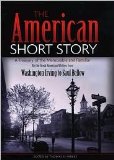 |
The American Short Story
Thomas Parkes |
|
This entertaining collection--a panoramic survey of American literature--presents over two
hundred years of great American Short stories in more than 1,000 pages. From Washington Irving to Joyce Carol Oates,
our nation's best writers are showcased at the top of their form. Selections from America's first great quartet of
fiction writers--Washington Irving, Nathaniel Hawthorne, Edgar Allen Poe, and Herman Melville--open this
extraordinary volume and reflect the birth of a distinctly American literature. The short story blossomed during the
nineteenth and early twentieth centuries, giving rise to superb works of realism, naturalism, and regionalism. The
American Short Story explores these traditions fully, with a wonderful sampling of writings from Ambrose Bierce,
Edward Everett Hale, Mark Twain, Bret Harte, Sarah Orne Jewett, Joel Chandler Harris, Frank Norris, Stephen Crane,
Theodore Dreiser, Henry James, Edith Wharton, and many others. Stories like F. Scott Fitzgerald's "Babylon
Revisited" and Ernest Hemingway's "The Snows of the Kilimanjaro" capture the brilliance of "The Lost Generation"
writers; the rich tradition of Southern storytelling comes to life in works by William Faulkner, Katherine Anne
Porter, Eudora Welty, Thomas Wolfe, and Flannery O'Connor; and, in works ranging from the sentimental to the
satirical, the hard-hitting to the hilarious, writers like Saul Bellow, James Baldwin, John Updike, and Kurt
Vonnegut, Jr., illuminate the experiences of America's extraordinarily diverse population. As surprising, diverting,
and rich in contradictions and contrasts as the country itself, this collection of stories is a true American
treasure and a cornerstone for every home library.
|
|
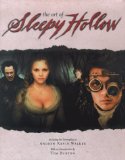 |
The Art of Sleepy Hollow
Andrew Kevin Walker |
|
As the director of such blockbusters as "Batman" and "Edward Scissorhands," and the producer of the
modern classic "The Nightmare Before Christmas," Tim Burton has earned a deserved reputation as one of today's most
creative and innovative filmmakers. "The New York Times" calls his work "dazzling," and "Entertainment Weekly" hails
him as America's "pop visionary." Now in this deluxe companion volume to his cinematic interpretation of the classic
tale of Ichabod Crane and the Headless Horseman, we go beyond the sets and into the mind's eye of the director, to see
how Burton's incomparable vision comes to life on film. Featuring production art, storyboards, costume designs, and
set sketches, we see Burton's concepts transformed into screen magic.
More than just a look into the making of
a motion picture, this is a collection of film artwork that is, in its own right, a major artistic statement.
Drawings and paintings from the production show the depth of artistry that goes into the creation of Burton's world.
His stunning vision of neo-Gothic nineteenth-century America comes alive: the foggy valleys of Sleepy Hollow, the
cobbled streets of old New York City, and the menace and terror of the Headless Horseman. This volume proves that his
vision not only resonates on the screen but on the canvas and sketchbook as well. The masterly work that accompanies
the dramatic script demonstrates Burton's awesome creative prowess -- as both an artist and a major force in American
cinema.
|
|
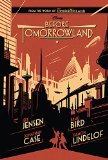 |
Before Tomorrowland
Jeff Jensen, Jonathan Case |
|
Based on the spellbinding world of the Walt Disney Studios film, Tomorrowland, this original prequel novel features a 20-page comic book
and unlocks a place of unfathomable science and technology and the famous people behind it.
The year is 1939.
A secret society of extraordinary
geniuses is about to share an incredible discovery with the world.
A misguided enemy--half man, half machine--will stop at nothing to prevent the group
from giving this forbidden knowledge to humanity.
And a mother and son on vacation in New York City are handed a comic book infused with a secret code
that will lead them straight into the crossfires of the conspiracy. |
|
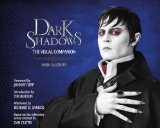 |
Dark Shadows: The Visual Companion
Mark Salisbury |
|
The cult television series Dark Shadows is fondly remembered by its fans — not least Tim
Burton and Johnny Depp, who reunited to bring a stunning re-imagining of the show to the big screen.
Produced in close cooperation with Tim Burton and the production team, this lavish official companion to the
film includes a Foreword by Depp, an Introduction by Burton and an Afterword by producer Richard D. Zanuck,
alongside scores of photos, concept drawings, production designs, and interviews with the cast and crew.
|
|
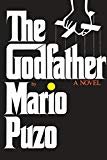 |
The Godfather
Mario Puzo |
|
Original first edition.
The Godfather—the classic saga of an American crime family that became a global phenomenon—nominated as one of America’s best-loved
novels by PBS’s The Great American Read.
With its brilliant and brutal portrayal of the Corleone family, The Godfather burned its way into our
national consciousness. This unforgettable saga of crime and corruption, passion and loyalty continues to stand the test of time, as the definitive novel
of the Mafia underworld.
A number-one New York Times bestseller in 1969, Mario Puzo’s epic was turned into the incomparable film of the same name,
directed by Francis Ford Coppola, which won the Academy Award for Best Picture. It is the original classic that has been often imitated, but never matched.
A tale of family and society, law and order, obedience and rebellion, it reveals the dark passions of human nature played out against a backdrop of the
American dream. |
|
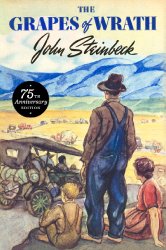 |
The Grapes of Wrath
John Steinbeck |
|
*First published in 1939, Steinbeck’s Pulitzer Prize–winning epic of the Great Depression chronicles the Dust Bowl migration of the 1930s
and tells the story of one Oklahoma farm family, the Joads, driven from their homestead and forced to travel west to the promised land of California. Out
of their trials and their repeated collisions against the hard realities of an America divided into haves and have-nots evolves a drama that is intensely
human yet majestic in its scale and moral vision, elemental yet plainspoken, tragic but ultimately stirring in its human dignity.
A portrait of the
conflict between the powerful and the powerless, of one man’s fierce reaction to injustice, and of one woman’s stoical strength, the novel captures the
horrors of the Great Depression and probes the very nature of equality and justice in America. As Don DeLillo has claimed, Steinbeck “shaped a geography
of conscience” with this novel where “there is something at stake in every sentence.” Beyond that—for emotional urgency, evocative power, sustained
impact, prophetic reach, and continued controversy—The Grapes of Wrath is perhaps the most American of American classics.
To commemorate the
book's 75th anniversary, this volume is modeled on the first edition, featuring the original cover illustration by Elmer Hader and specially designed
endpapers by Michael Schwab.
|
|
 |
Harry Potter Page to Screen: The Complete Filmmaking Journey
Bob McCabe |
|
Harry Potter: Page to Screen opens the doors to Hogwarts castle and the wizarding world of
Harry Potter to reveal the complete behind-the-scenes secrets, techniques, and over-the-top artistry that
brought J.K. Rowling’s acclaimed novels to cinematic life. Developed in collaboration with the creative team
behind the celebrated movie series, this deluxe, 500-plus page compendium features exclusive stories from the
cast and crew, hundreds of never-before-seen photographs and concept illustrations sourced from the closed
film sets, and rare memorabilia. As the definitive look at the magic that made cinematic history, Page to
Screen is the ultimate collectible, perfect for Muggles everywhere.
|
|
 |
Illusion (Through the Never Series)
Tracey R. Newman |
|
*Autographed by the author.
Sacred relics unearthed in a mountain cave deep within the Bolivian jungle plunge famed American
archaeologist, Nickolaus Adallyus Piper into a world where reality and illusion converge. Abandoned to follow cryptic clues left in the wake of his mentor,
Tobias Alger's death, Nick races against time to save the one woman who holds the key to his redemption as he struggles to stay beyond the reach of Scotland
Yard Inspector, Mason Chase who suspects Piper is guilty of more than murder. But Piper isn't the only one being hunted. The Dowager Armalai, a cult of
assassins centuries old will stop at nothing to capture Mason and bring her before their Mistress, an ancient Evil older than Time. What happens next will
decide the fate of All Souls...
|
|
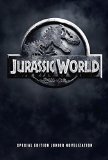 |
Jurassic World Special Edition Junior Novelization
David Lewman |
|
Jurassic World is the long-awaited next installment of the groundbreaking Jurassic Park series. T. rex’s, velociraptors, triceratops—as well as
some all-new dinosaurs—will roar across the screen in this epic action-adventure directed by Colin Trevorrow starring Chris Pratt, Bryce Dallas Howard, Ty Simpkins
and Nick Robinson! Jurassic World Special Edition Junior Novelization retells the whole exciting adventure and features sixteen pages of full-color scenes from
the movie.
|
|
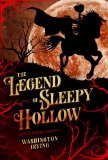 |
The Legend of Sleepy Hollow and Other Stories
Washington Irving |
|
In this anthology of short-stories Irving has captured a wide array of themes. His themes are presented subtly and ingeniously. Although
the stories are set in a murky backdrop their romanticism is captivating. These witty, profound and captivating stories range from fantasy to romance.
|
|
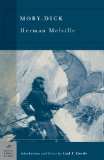 |
Moby-Dick
Herman Melville |
|
On a previous voyage, a mysterious white whale had ripped off the leg of a sea captain named Ahab.
Now the crew of the Pequod, on a pursuit that features constant adventure and horrendous mishaps, must follow the mad
Ahab into the abyss to satisfy his unslakeable thirst for vengeance. Narrated by the cunningly observant crew member
Ishmael, Moby-Dick is the tale of the hunt for the elusive, omnipotent, and ultimately mystifying white whale—
Moby Dick.
|
|
 |
O: A Presidential Novel
Anonymous |
|
The truth only fiction can tell. This is a novel about aspiration and delusion, set during
the presidential election of 2012 and written by an anonymous author who has spent years observing politics
and the fraught relationship between public image and self-regard. The novel includes revealing and
insightful portraits of many prominent figures in the political world—some invented and some real.
|
|
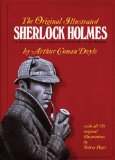 |
The Original Illustrated Sherlock Holmes
Arthur Conan Doyle |
|
Here are the original Sherlock Holmes detective stories as they first appeared in the
famed British magazine “The Strand.” This edition contains 37 short stories plus the complete novel "The
Hound of the Baskervilles."
|
|
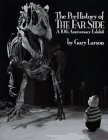 |
The Prehistory of the Far Side
Gary Larson |
|
"The Prehistory of the Far Side: A Tenth Anniversary Exhibit," by Gary Larson, is a
slightly different volume in the "Far Side" book series. This book collects Larson's cartoons, but
there's more: according to the foreword, the purpose of the book is "to reveal some of the background,
anecdotes, foibles, and 'behind-the-scenes' experiences related to this cartoon panel." Part of the
book's fun is figuring out what parts of this "behind-the-scenes" material are for real and what parts
are just further jokes on Larson's part.
|
|
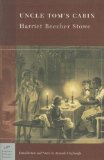 |
Uncle Tom's Cabin
Harriet Beecher Stowe |
|
Nearly every young author dreams of writing a book that will literally change the world. A few have
succeeded, and Harriet Beecher Stowe is such a marvel. Although the American anti-slavery movement had existed at
least as long as the nation itself, Stowe’s Uncle Tom’s Cabin (1852) galvanized public opinion as nothing had before.
The book sold 10,000 copies in its first week and 300,000 in its first year. Its vivid dramatization of slavery’s
cruelties so aroused readers that it is said Abraham Lincoln told Stowe her work had been a catalyst for the Civil
War.
|
|
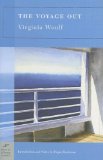 |
The Voyage Out
Virginia Woolf |
|
We meet young, free-spirited Rachel Vinrace aboard her father's ship, the Euphrosyne, departing
London for South America. Surrounded by a clutch of genteel companions—among them her aunt Helen, who judges Rachel
to be "vacillating," "emotional," and "more than normally incompetent for her years"—Rachel displays a startling
maturity when she finds her engagement to the writer Terence Hewet listing toward disaster. As she soon discovers,
"tragedies come in the hungry hours."
|
|
|




